This post was originally published on the What If? blog in October 2016, as a contribution to a continuing debate about the future of cooperative development in the UK.
In his recently republished Cooperative Manifesto, Tim Huet explains why he came to the conclusion that ‘There Is No More Important Social Change Work You Can Do Than Cooperative Development’. Huet was one of the first organisers of the Arizmendi Assocation of Cooperatives, which Ed Mayo describes as a great example of coop replication.
In his recently republished Cooperative Manifesto, Tim Huet explains why he came to the conclusion that ‘There Is No More Important Social Change Work You Can Do Than Cooperative Development’. Huet was one of the first organisers of the Arizmendi Assocation of Cooperatives, which Ed Mayo describes as a great example of coop replication.
For Huet, coops become relevant when they are part of a wider movement against capitalism. They provide answers to ‘the military question’: while closures, crises, strikes, protests and occupations can create the possibility and space for change, how do people self-organise to consolidate that space and expand it, by developing bases of economic and social power?
The difficult question of times
When cooperatives take a great leap forward, it’s usually in times of social crisis. This is when the relevance, necessity and potential of cooperation become clearest to people. In the ‘hungry 1840s’, the Rochdale cooperators’ fifth object was to ‘arrange the powers of production, distribution, education and government’. Providing decent food, building houses, providing decent work and acquiring land were immediate tasks and also steps towards a hegemonic cooperative commonwealth, to be established ‘as soon as practicable’. Expressed in different language in different times, this is the invariant programme of cooperatives as a movement. So when is ‘practicable’, and what is practical now? These are strategic questions, throwing up yet more questions. What are the possibilities in these times? What resources, self-help and solidarity can we mobilise in this situation?
The political shell
The political shell
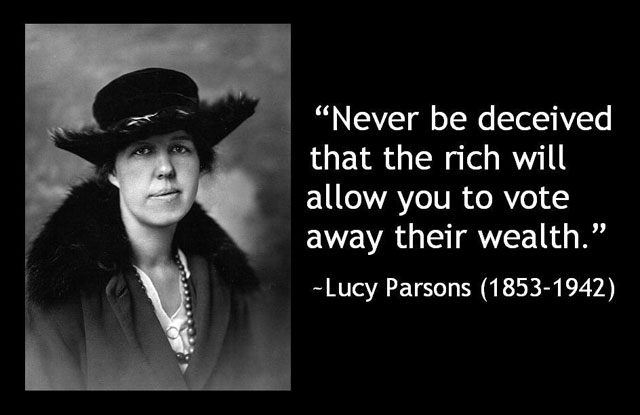
Cooperatives seek to be self-reliant, therefore independent of lobbies and parties that seek to influence through private corporations or state action. The instinct of governments and sectional interests is to enrol, recuperate or suppress autonomous movements, including cooperatives. Coop organisations, therefore, have a strategic defence and propaganda role. In the present time of political turmoil, when parties make policy blandishments towards mutuals and coops, the principle of autonomy guides strategy and tactics. Cooperative movements exercise political ‘neutrality’ in order to maintain strategic freedom to resolve the real questions of social and economic power in favour of people.
Necessity, the mother of cooperation
We cooperate because there is no better or no other way. Meeting peoples’ self-defined needs and aspirations is the relevance test. We know that the movement is re-invented and grows fast in times of widespread social and economic conflict, if people have the means and opportunity to adapt the technology of cooperation. Lancashire in the 1840s, Ireland in the 1890s, post war Italy, Spain in the 1950s, Argentina in the present century.
Change was in the air in the 1970s. A wave of coop formations in the UK and US was inspired by a mix of libertarian socialism, anarchism, anti racism, the rising ecology movement, second wave feminism, community organising and other currents. Cooperatives gave people new infrastructure and tools in a period of social contestation. That wave fell back in the times of reaction which followed, particularly in the 1990s. In that phase, any strategy to rapidly expand coops had its work cut out. So, is now our time?
Of course, we don’t know yet. We know there is social conflict and political disintegration; we know people are in need; that people want change. But are they moving towards self-organised ways and means to get it? Do they have the time, social capital and savings to invest? Are they confident enough? Hindsight is easy, yet experience suggests that productive strategy won’t be a matter of helicoptering legacy coop models onto disparate people and situations, so much as directing solidarity to those expressing a desire to change their situation by acting together, and who feel that change is realistic, possible and necessary, even if they haven’t heard about coops. Where the human and material resources – cooperative capital – come from is another strategic challenge, especially in a country whose coops squandered their assets and failed to invest in the movement for decades.
Strategy has to aim at developing a framework in which cooperators can respond quickly and intelligently to what’s going on around them. Coop advocacy needs to work close to the heat, designing and disseminating relevant information about ‘why’ as well as proposals for ‘how’. Whatever language we use towards governments, policy makers and ‘influencers’, we need authentic language to speak to people. The effort to develop a real, uncompromised cooperative politics is especially urgent in times of cultural dissonance and rampant ideological cretinism.
Not all cooperation is good for you
Not all modes of cooperation are in themselves positive. We can understand the complex cooperation of workers that enables private firms to extract profit, the cooperation of prisoners with their captors, or the enthusiastic collaboration of consumers with extractive platforms, without justifying them as behaviours that meet peoples’ mutually defined needs and aspirations. Cooperative messages have to inspire, but they can’t just be feel good platitudes. They need to express what we cooperate against, as well as for. Our language should be sensitised to the fact that few would-be cooperators want to self-identify as ‘business’ people, for instance. Jargon words like ‘innovation’ and ‘entrepreneurialism’ mask mechanisms for increasing inequality and intensifying exploitation. The more we scramble our messages by trying to reclaim alienated vocabulary – perhaps to appear progressive, mainstream or unfrightening – the more we obscure the potential of cooperation as part of a movement for social change and the less relevant coops will seem to people. Good communication is strategic.
Show us the money
If the purpose of the coop movement is to create new cooperators, we can’t be defensive or patronising when they articulate a radical coop vision literally, even bluntly; or when they challenge the coop establishment. They’re correct, if not always polite. Years of work, negotiation and experience may yield useful knowledge and resources, but they don’t confer superior wisdom, ownership of the movement, or special insight into the goals and methods of coop strategy.
In a sense, any new wave of coops and cooperators begins to fail at the point it stops growing and starts consolidating. In movement terms, a coop that disappears is not necessarily a failure, and coops that go on forever are not all successes. Whether they go back 20 or 150 years, established coops tend to make their peace. They mutate from radical groups, to incorporated bodies, to businesses; move from meeting needs and aspirations, to hitting commercial targets; from self-help to charity. This is predictable. You can create coops, but you can’t make a commonwealth one coop at a time. Raising the game of intercooperation is strategic.
Strategy should to seek to update and adapt the coop development repertoire in response to times and situations. We should be open to the new, the unfamiliar, and the alarming. Strengthening established coops should be an object of strategy, where those coops are able to renew themselves and contribute to the renewal of the movement. In this wider renewal, younger generations often do the heavy lifting. They articulate new needs and aspirations, or old needs and aspirations in a new context. They put in the sweat equity. Many new coops are proposed or advised by old hands, and helping new cooperators make the right alliances and avoid old traps is vital. Yet we should not be in the business of judging whether there is a ‘market’ for their ideas and approaches. Coop renewal often means attempting things that are impossible, according to received wisdom. This is part of coop realism.

We will need to engage with many projects that don’t develop, to find the ones that could change everything. New cooperators are often our most passionate and connected advocates. In the recent uptick of formations in London and in the tech community, for instance, coop methods are being used by social activists contesting the use and ownership of new technologies; looking for new ways to combat exploitation; defending the commons; combatting fuel poverty; resisting landlords; radicalising food culture and politicising cultural work. Their views about the utility of what worked for people five, thirty or a hundred years ago are respectful and open, but critical. They look beyond the formal movement, and beyond the UK, for ideas and inspiration. The dimensions of the social crisis are global and local, rather than national. Deepening cooperative internationalism, and looking beyond the existing legal and national frameworks, are strategic for local development.
The places to look for the next wave of cooperators are all around us, if we’re willing to engage. The next game-changing coops may be on the verge of coming into existence.
This post was originally published on the What If? blog in October
2016, as a contribution to a continuing debate about the future of
cooperative development in the UK.
Join SolidFund: http://solidfund.coopFollow @Scumboni and @Solidfund on Twitter.

